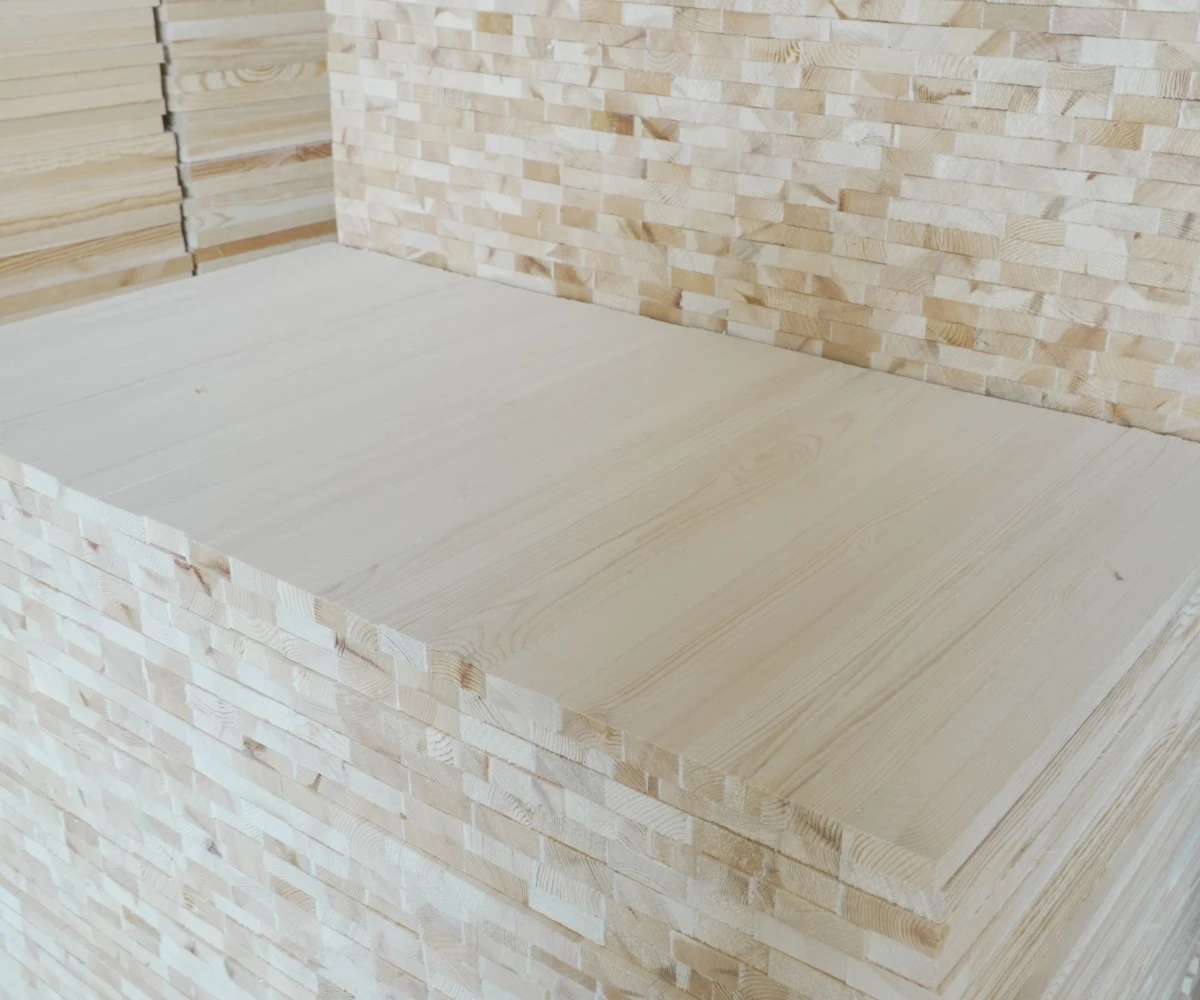
High-quality substrates are the foundation for ensuring board performance. During production, materials such as particleboard, MDF, or plywood undergo rigorous screening and processing to achieve excellent flatness, stability, and load-bearing capacity. This prepares them for the application of a decorative paper overlay, which is securely bonded to the substrate using high-temperature and high-pressure processes to create a protective surface layer. Techniques such as embossing, film lamination, and synchronized wood-grain texturing employed during the pressing process enrich the board's texture and tactile quality, thereby enhancing its decorative appeal. Furthermore, appropriate surface processing creates optimal conditions for the final product.
Surface lamination technology is a core process in melamine board manufacturing. It involves overlaying the substrate with decorative paper impregnated with melamine resin and bonding the two securely under high temperature and pressure to form a protective finish. Precise control of temperature, pressure, and duration during this process is essential to ensure a flat surface and a strong bond, preventing defects such as blistering, cracking, or delamination.
Surface treatment technology is another critical factor influencing the quality of melamine boards. Advanced techniques-including embossing, lamination, and synchronized wood-grain texturing-impart rich textures and tactile qualities to the boards, enhancing their decorative value. Additionally, effective surface treatment improves resistance to abrasion, scratches, stains, and heat, making the boards better suited for everyday use.
Environmentally friendly production is also a key direction in the evolution of melamine boards. Manufacturers must control adhesive usage and the emission of harmful substances, utilizing raw materials and processes that meet environmental standards to improve the product's eco-friendliness. As manufacturing technologies advance, melamine boards are increasingly characterized by high stability, superior decorative qualities, and environmental sustainability.